When the Ritual Stops Working: How to Recognize and Overcome a Matcha Practice Plateau
There is a particular kind of disappointment reserved for the practitioner who has done everything right. You sourced quality matcha. You learned to whisk properly. You carved out time each morning before the notifications began. And then, quietly, without announcement, the ritual stopped delivering what it once did. The calm felt thinner. The focus felt ordinary. The bowl that once marked a genuine transition in your day became just another item on the checklist.
This experience has a name: the matcha plateau. And while it is rarely discussed in the same breath as the benefits of the practice itself, it is nearly universal among those who commit to matcha seriously over months and years. Understanding what drives it—and how to disrupt it—is not a detour from your practice. It is, arguably, the next stage of it.
Why Plateaus Are Physiological, Not Personal
The human nervous system is remarkably efficient at normalizing the familiar. When a stimulus is repeated consistently—the same grade of matcha, prepared the same way, at the same time, in the same environment—the brain begins to anticipate and pre-compensate for its effects. This phenomenon, broadly understood as habituation, means that a ritual which once required genuine attention begins to run on autopilot.
L-theanine and caffeine, the two compounds most associated with matcha's distinctive calm-focus effect, do not disappear from the equation. But the body's receptors and neurochemical pathways become calibrated to their presence. The contrast that made the morning bowl feel meaningful—the shift from an unfocused state to a grounded one—narrows until it is nearly imperceptible.
This is not a flaw in the practice. It is a feature of human adaptation. The question is whether you recognize it as an invitation to change rather than evidence that matcha has stopped working.
The Subtle Signs That Your Practice Has Calcified
A plateau rarely arrives with clarity. More often, it accumulates in small signals that are easy to dismiss individually.
You may notice that you are completing your preparation while mentally already elsewhere—running through a meeting agenda or composing a reply to an email you haven't opened yet. The physical act of whisking continues, but the quality of attention has evacuated the ritual entirely. The bowl is consumed, the day proceeds, and nothing feels particularly different.
Alternatively, you may find that the taste itself has lost dimensionality. Matcha that once revealed layers—vegetal, sweet, subtly marine—now registers as simply green and warm. This is not sensory failure. It is the predictable outcome of encountering the same flavor profile without variation for an extended period.
Some practitioners report that the window of focused energy following their morning bowl seems shorter, or that they have begun adding more matcha to compensate, chasing an effect that increasing quantity cannot reliably restore.
All of these are invitations to intervene.
Strategic Grade Rotation: Disrupting the Expected
One of the most effective resets available to a practicing matcha drinker is a deliberate shift in grade or origin. If your daily ritual centers on a single ceremonial-grade matcha from one region, introducing a different origin—even temporarily—reintroduces novelty at the sensory level.
Japan's major matcha-producing regions each carry a distinct flavor signature. Uji, in Kyoto Prefecture, tends toward a refined umami depth. Nishio, in Aichi Prefecture, often presents a brighter, slightly more vegetal character. Yame, in Fukuoka, is known for a pronounced sweetness with a lighter finish. Rotating between these profiles across seasons gives the palate new information to process, which in turn re-engages the attentional systems that habituation had begun to suppress.
Seasonal alignment adds another dimension. Many practitioners find that treating their matcha selection the way a thoughtful cook treats produce—seeking what is fresh, appropriate to the season, and slightly unfamiliar—restores a sense of intention to the sourcing process itself.
Reimagining the Ritual Architecture
Beyond the matcha itself, the structure of the ritual is often where calcification runs deepest. When every element of a practice is predictable—the mug, the amount of water, the number of whisk strokes, the corner of the kitchen where you always stand—the mind learns to disengage before the bowl is even finished.
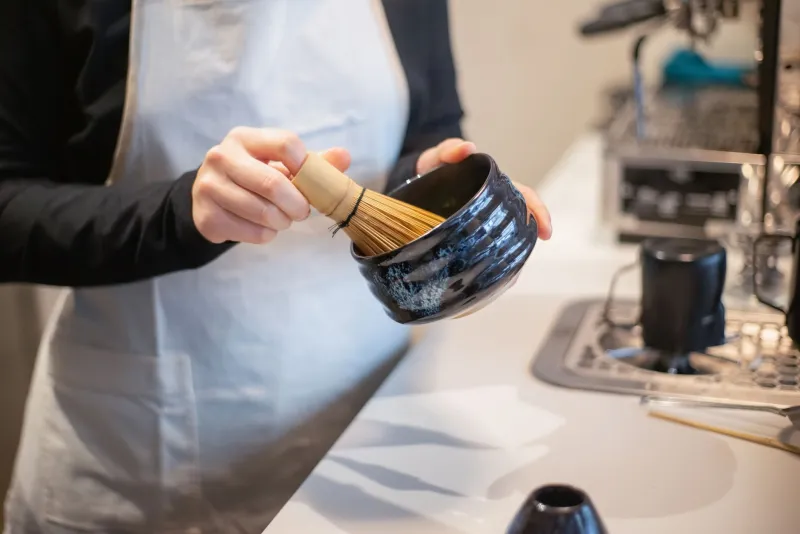
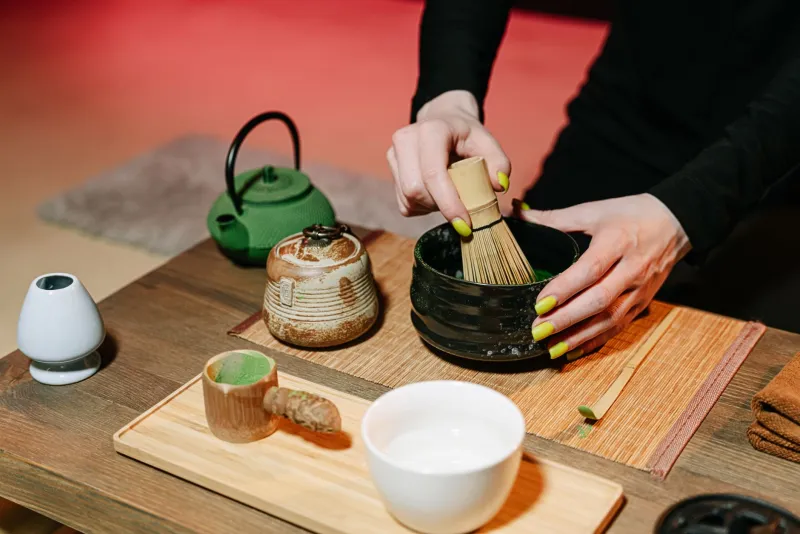
Small, deliberate disruptions can be surprisingly powerful. Consider preparing your matcha in a different room, or at a different time of day, even occasionally. Shift from a chasen whisk to a bamboo frother for a week, or explore koicha—thick-style matcha—if your practice has been exclusively usucha. Adjust your water temperature slightly cooler and attend carefully to how the flavor profile shifts.
These are not arbitrary changes. They are invitations to return to beginner's attention, the quality of noticing that made the early days of your practice feel alive. In Japanese aesthetic philosophy, the concept of ma—the meaningful pause, the intentional space—is not a passive absence but an active presence. Introducing deliberate variation into your ritual creates ma where routine had eliminated it.
Bringing the Body Back Into the Bowl
For many practitioners who have hit a plateau, the most significant loss is not the neurochemical effect but the embodied quality of the ritual. The hands move through preparation without sensation. The warmth of the bowl against the palms goes unnoticed. The sound of the whisk against ceramic registers as background noise rather than a present-tense experience.
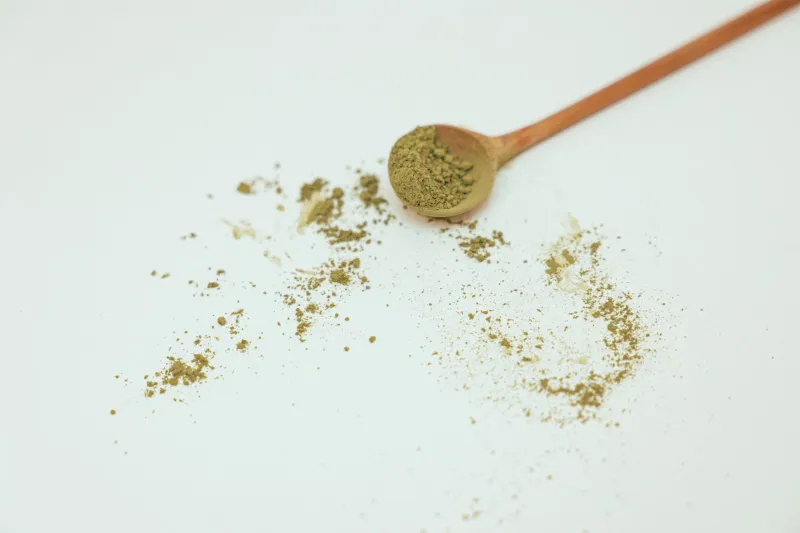
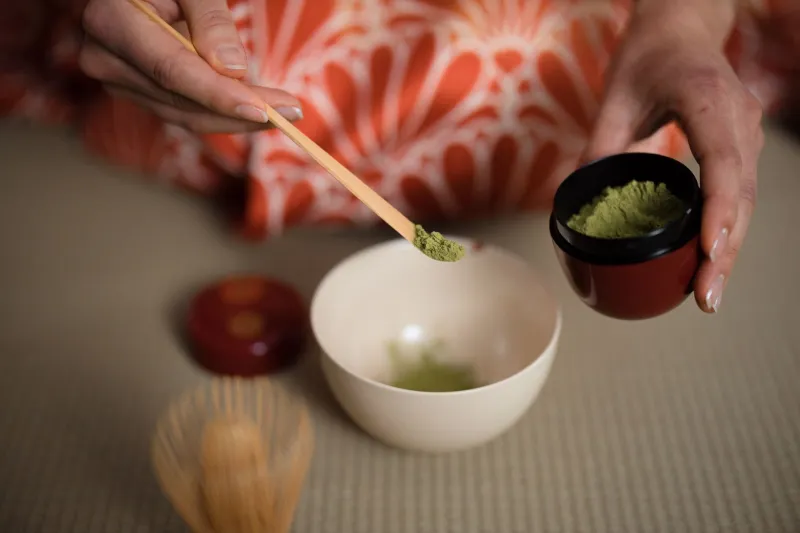
A simple recalibration practice: before you begin preparation, spend sixty seconds in stillness. Not meditation, necessarily—simply stillness. Notice the temperature of the room. Feel the weight of the chasen in your hand before you begin. When you sift the matcha, attend to the color and texture as though encountering them for the first time. This is not theater. It is the practice of returning attention to the body, which is where ritual actually lives.
Some practitioners find that journaling a single sentence about each day's bowl—the dominant flavor, the quality of focus that followed, the mood of the preparation—reintroduces a layer of reflective attention that the plateau had eroded.
The Plateau as a Threshold, Not a Dead End
It is worth naming something directly: the matcha plateau, uncomfortable as it is, is evidence that you have been practicing. It does not arrive in the first week or the first month. It arrives after genuine commitment, after the ritual has become integrated enough into your life that it can calcify. In this sense, it is a marker of progress.
The practitioners who move through plateaus most effectively are those who approach them with curiosity rather than frustration. They ask not why has this stopped working but what is this asking me to notice? Often, the answer involves something beyond the bowl—a life that has grown as routine as the ritual itself, a need for broader renewal that the matcha practice is simply reflecting back.
At Kagura Matcha, we believe that an authentic relationship with this practice is not static. It deepens, contracts, evolves, and occasionally requires a deliberate reset. The bowl remains. The whisking continues. But the practitioner who returns to the ritual with fresh eyes—and perhaps a different grade, a different vessel, or a different hour—discovers that the magic was never gone. It was simply waiting to be found again.