When the Bowl Loses Its Magic: Understanding Sensory Adaptation in Your Matcha Practice
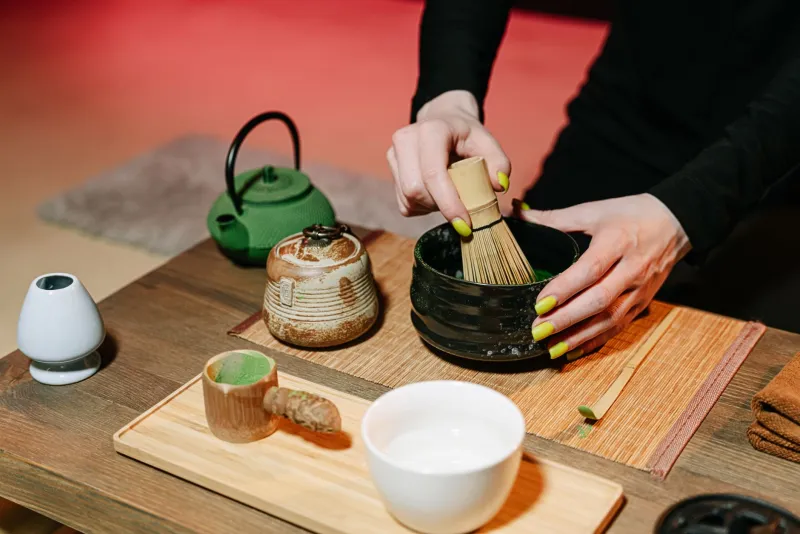
There is a particular kind of disappointment that arrives quietly. You prepare your bowl with the same care you always have — the measured scoop, the precise water temperature, the steady figure-eight of the chasen — and yet something feels muted. The ritual is intact, but the experience has flattened. The clarity you once felt within minutes of your first sip seems harder to locate. The flavor, once vivid and complex, has become familiar in a way that no longer excites.
This is not a sign that matcha has stopped working. It is a sign that your nervous system is doing exactly what it was designed to do.
The Neuroscience of Diminishing Returns
Sensory adaptation is a fundamental feature of human perception. When the brain encounters a stimulus repeatedly — whether it is a scent, a flavor, a sound, or a chemical compound — it gradually reduces its response to that stimulus over time. This process is efficient by design: the nervous system conserves resources by treating familiar inputs as background rather than foreground.
For matcha drinkers, this adaptation can manifest across multiple dimensions simultaneously. The umami depth of high-quality shade-grown leaves may register less vividly after months of daily consumption. More significantly, the psychoactive compounds in matcha — primarily L-theanine and caffeine — can produce subtler subjective effects as the brain recalibrates its baseline responses to their presence.
This does not mean tolerance has developed in the clinical sense that word implies for pharmaceuticals. Rather, the contrast between your baseline state and your post-matcha state has narrowed, because your baseline has quietly shifted toward the new normal your practice established.
Recognizing the Signs
Before adjusting your practice, it is worth pausing to honestly assess what has changed. The plateau tends to announce itself in a few recognizable ways.
You may notice that the meditative quality of preparation — once an anchor for genuine presence — has become more mechanical. Your hands move through the motions while your mind remains elsewhere. The ritual has become routine in the least flattering sense of that word.
Alternatively, you might find that the flavor no longer commands your attention. Where you once detected the grassy brightness of the first sip or the lingering sweetness that follows a proper whisk, you now simply drink.
Finally, the functional effects — the focused calm that distinguishes matcha from coffee — may feel harder to access. You consume your bowl and proceed with your morning without the subtle but meaningful shift in mental register that originally drew you to this practice.
If any of these descriptions resonate, what follows is a structured approach to recalibration.
Strategic Pauses: The Case for Intentional Absence
The most direct remedy for sensory adaptation is contrast, and contrast requires absence. A deliberate pause from your daily matcha practice — sometimes called a "matcha fast" among enthusiasts, though the term is informal — allows your nervous system to reset its baseline.
A period of five to ten days is generally sufficient to restore meaningful sensitivity to both the flavor and the functional effects of matcha. During this interval, avoiding other sources of caffeine where possible will deepen the reset, as the brain's adenosine receptors — which caffeine temporarily blocks — will have an opportunity to recalibrate more fully.
This pause need not be framed as deprivation. Approached with the same intentionality that characterizes a thoughtful matcha practice, it becomes its own form of mindfulness: an exercise in noticing what is absent, and in cultivating genuine anticipation for what will return.
Preparation Variables as a Tool for Renewal
For those who find a complete pause impractical — or who simply wish to address the plateau through refinement rather than absence — adjusting the variables of preparation offers a meaningful alternative.
Water temperature is among the most underexplored levers available to the home practitioner. Most preparation guides recommend water between 160°F and 175°F, and for good reason: excessive heat degrades the delicate amino acids responsible for matcha's characteristic sweetness and smoothness. However, within that range, even modest adjustments — moving from 175°F down to 165°F, for instance — can reveal flavor dimensions that higher temperatures suppress. The resulting cup will taste meaningfully different, not because the matcha has changed, but because the extraction profile has.
Whisk technique is another variable worth revisiting deliberately. Slowing the motion, altering the wrist angle, or extending the whisking duration by thirty seconds can produce a noticeably different foam texture and aroma profile. These changes engage your attention in ways that automatic repetition cannot.
Finally, the ratio of matcha to water deserves periodic reconsideration. A slightly thicker preparation — moving toward the consistency of koicha, the thick tea of formal Japanese ceremony — transforms the sensory experience entirely, demanding a slower, more attentive approach to drinking.
Complementary Pairings That Restore Contrast
Food pairing represents another avenue for reviving sensory engagement. The Japanese tradition of wagashi — small confections served alongside tea — is not merely aesthetic. These preparations are designed to interact with the flavor profile of matcha in specific ways, with their sweetness amplifying the tea's bitterness and creating a more dynamic tasting experience.
For American practitioners, the principle translates readily. A small piece of dark chocolate, a few roasted walnuts, or a lightly sweetened rice cake consumed immediately before your matcha can recalibrate your palate and make the subsequent flavors register with renewed clarity. The contrast between sweet and bitter, between the food's texture and the tea's liquidity, reactivates sensory attention that routine has dulled.
Some practitioners also find that changing the physical context of their ritual — moving from a kitchen counter to an outdoor space, or shifting their practice from morning to late afternoon — introduces enough environmental novelty to restore a sense of occasion.
Rotating Your Matcha Source
If your practice has relied on a single matcha for an extended period, introducing a second origin or harvest can be genuinely revelatory. Matcha from Uji will taste meaningfully different from matcha produced in Nishio or Kagoshima. First-harvest ceremonial grades carry a distinct character compared to later-harvest expressions. Rotating between two or three carefully selected options — rather than treating your single tin as a permanent fixture — keeps your palate engaged and your appreciation calibrated.
This approach also deepens your understanding of matcha as an agricultural product rather than a commodity. Each harvest, each region, each producer makes decisions that shape the cup in ways worth noticing.
Returning With Fresh Eyes
The plateau, understood correctly, is not a failure of your practice. It is evidence that your practice has been consistent enough, and sustained enough, to produce genuine neurological adaptation. That is, in its own way, a measure of commitment.
The path forward is not abandonment but recalibration. Whether through a brief and intentional pause, a refinement of technique, a thoughtful pairing, or a rotation of sources, the depth of your matcha practice is recoverable. Often, it emerges from the other side of a plateau richer and more nuanced than it was before — because you now bring both experience and renewed attention to the bowl.