Put the Phone Down: How Five Minutes of Whisking Each Morning Rewires Your Brain Before the World Gets In
There is a particular kind of anxiety that begins before breakfast. It arrives not with the alarm, but with the thumb — the automatic, almost unconscious reach toward the nightstand, the screen already lighting up with notifications that have accumulated overnight. By the time the first cup of coffee is poured, many Americans have already absorbed a news headline, three social media posts, and a work email that wasn't urgent. The day has barely begun, and the nervous system is already on alert.
This is not a moral failing. It is, in large part, a neurological one — and understanding it is the first step toward choosing something different.
What the Morning Scroll Actually Does to Your Brain
The compulsive quality of morning phone use is not accidental. Social media platforms are engineered around variable reward schedules — the same psychological mechanism that makes slot machines so difficult to walk away from. Each refresh offers the possibility of something novel: a like, a comment, a piece of news. The brain's dopaminergic system, which governs motivation and anticipation, responds to this unpredictability with a low but persistent activation. It is not satisfaction that keeps the scroll going. It is the perpetual almost of potential reward.
Neuroscientist Anna Lembke, whose research on dopamine and compulsive behavior has reached mainstream audiences in recent years, describes this cycle as one that recalibrates the brain's baseline. When the first stimulus of the day is high-frequency, unpredictable, and passive — meaning, you receive rather than create — the brain begins calibrating the rest of the morning against that standard. Focus feels harder to sustain. Quieter activities feel less compelling. The threshold for what registers as interesting gets quietly raised.
The practical consequence: by 9 a.m., many people already feel behind, scattered, or vaguely unsettled — without being entirely sure why.
Why Ritual Interrupts the Pattern
Behavioral neuroscience has long recognized that habits operate through a three-part loop: a cue, a routine, and a reward. The morning phone check has a very clear cue — waking up — and a deeply grooved routine. Interrupting it requires not willpower alone, but a competing behavior that is sufficiently engaging to occupy the same neurological territory.
This is where matcha preparation becomes genuinely interesting, rather than merely pleasant.
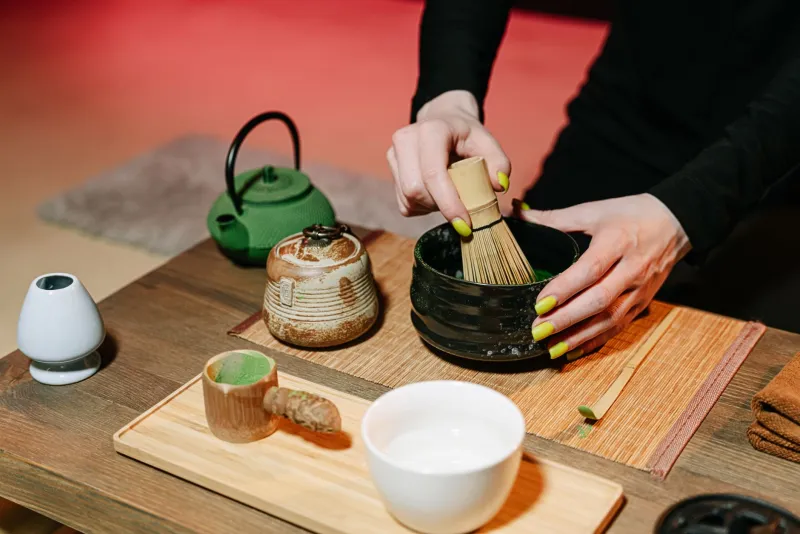
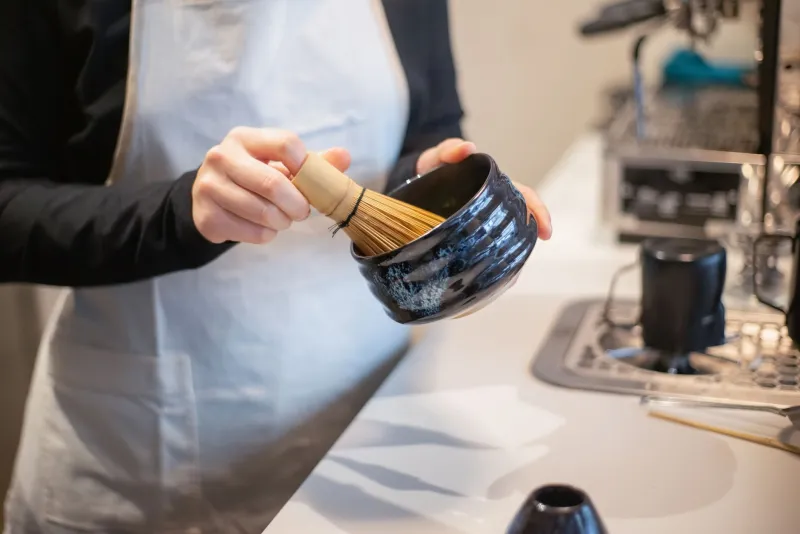
The act of preparing matcha by hand — sifting the powder, warming the bowl, measuring the water, and whisking in deliberate strokes — engages the prefrontal cortex in a way that passive scrolling does not. It requires sequential attention. It produces a tangible result. And it involves sensory input across multiple channels simultaneously: the visual texture of the foam, the warmth of the ceramic against the palms, the clean, vegetal fragrance that rises from a quality ceremonial-grade powder.
This multi-sensory engagement activates what researchers sometimes call the "task-positive network" — the brain circuitry associated with deliberate, goal-directed activity. More significantly, it does so without the variable-reward volatility of social media. The reward here is consistent and proportional: effort in, calm focus out. Over time, the brain begins to associate the morning cue of waking with this ritual rather than the phone, and the compulsive quality of the scroll loses some of its grip.
The Practical Transition: A Script for the First Week
Knowing the neuroscience is useful. Having a concrete plan is more useful still. The following approach has helped many practitioners make this shift without relying on sheer discipline.
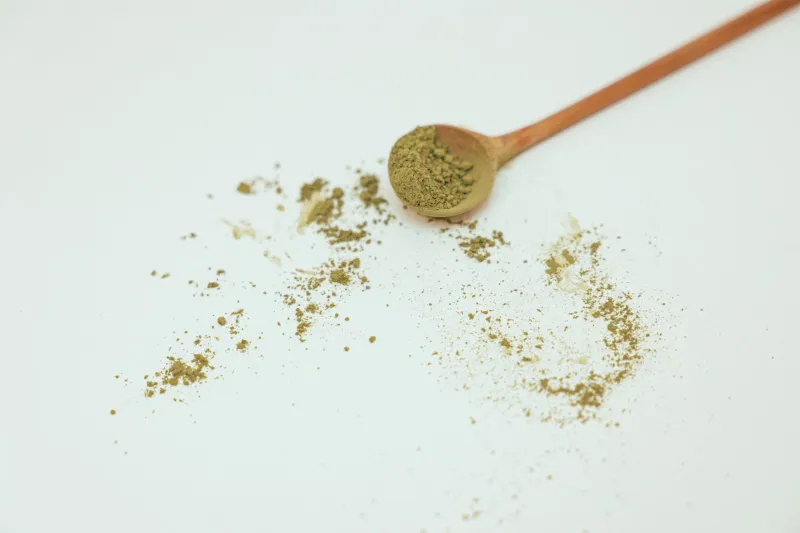
Night before: Place your matcha bowl, chasen (bamboo whisk), and a small tin of ceremonial-grade matcha on the kitchen counter before going to bed. Leave your phone charging in another room, or at minimum, across the room from your bed. Remove the physical proximity that makes the morning reach automatic.
Upon waking: Before looking at the phone, move to the kitchen. The physical act of getting up and changing rooms breaks the cue-routine association more effectively than simply trying to resist while still in bed.
During preparation: Treat the five minutes as genuinely non-negotiable. Water temperature matters — 175°F is the standard recommendation for preserving the delicate amino acid profile of ceremonial matcha, including the L-theanine that contributes to calm alertness. Whisk in a brisk W or M motion until a fine, even foam develops across the surface. This is not the moment for multitasking.
While drinking: Remain off the phone for the duration of the cup. Look out a window. Notice the light. Allow the L-theanine and moderate caffeine to reach the bloodstream before introducing external stimulation.
The phone is not forbidden. It simply waits.
What People Who Have Made the Swap Actually Report
The accounts from practitioners who have sustained this transition for more than two weeks share a notable consistency. The initial challenge is rarely willpower — it is the strange, slightly uncomfortable quality of not knowing what happened overnight. That discomfort, most report, passes within four or five days.
What tends to replace it is described in fairly similar terms: a sense of having claimed the first part of the morning as genuinely one's own. Several practitioners note that their first hour of focused work — whether writing, reading, or planning — feels qualitatively different. Decisions feel less reactive. The emotional tone of the morning is set from the inside rather than imported wholesale from a feed.
One practitioner, a project manager based in Portland who made the switch after reading about dopamine fasting, described it this way: "I didn't expect the whisking itself to matter so much. But there's something about making something with your hands first thing — it orients you differently. You've already done something before the day asks anything of you."
Another, a graduate student in Chicago, noted a reduction in what she called "preemptive anxiety" — the low-level dread that had previously accompanied her mornings without a clear cause. "I think I was just starting every day already overwhelmed," she said. "The matcha ritual gave me a five-minute buffer where nothing bad could reach me yet."
The Deeper Principle
There is a concept embedded in Japanese tea culture — ma — that refers to the meaningful pause, the intentional space between actions. In the context of chado, the way of tea, this pause is not emptiness. It is preparation. It is the moment in which presence is gathered before engagement begins.
The morning phone scroll offers no such pause. It fills the transitional space between sleep and wakefulness with noise that belongs to other people's agendas. The matcha ritual, by contrast, inserts a brief but genuine interval of self-directed attention — one that happens to come with a bowl of something warm, focused, and quietly fortifying.
Five minutes is not a large ask. But the morning is not a neutral time. What occupies it tends to set the register for everything that follows. Choosing what that is — deliberately, repeatedly, until it becomes its own kind of habit — may be one of the more consequential small decisions available to the modern practitioner.
The phone will still be there when the bowl is empty. The question is simply whether you reach for it, or it reaches for you.