Before You Drink: What Matcha Consumers Should Know About Medications and Health Conditions
At Kagura Matcha, we believe that informed consumers make better decisions—for their health, their practice, and their relationship with the tea they choose to drink. Most of what is written about matcha focuses, understandably, on its benefits: the sustained focus, the antioxidant content, the calming alertness that distinguishes it from coffee. These benefits are real, well-documented, and meaningful.
But a complete picture of matcha's effects on the body includes an honest look at its potential interactions with medications and certain health conditions. This is not a reason for alarm. For the vast majority of healthy adults, daily matcha consumption presents no meaningful risk. It is, however, a reason to be informed—particularly for those managing chronic conditions or taking prescription medications.
The following is a summary of the most clinically relevant considerations, drawn from available research. It is not a substitute for medical advice. If you have specific health concerns, a conversation with your physician or pharmacist is always the appropriate first step.
The Two Primary Active Compounds and Why They Matter
To understand matcha's potential interactions, it helps to understand what makes it pharmacologically distinct from most beverages.
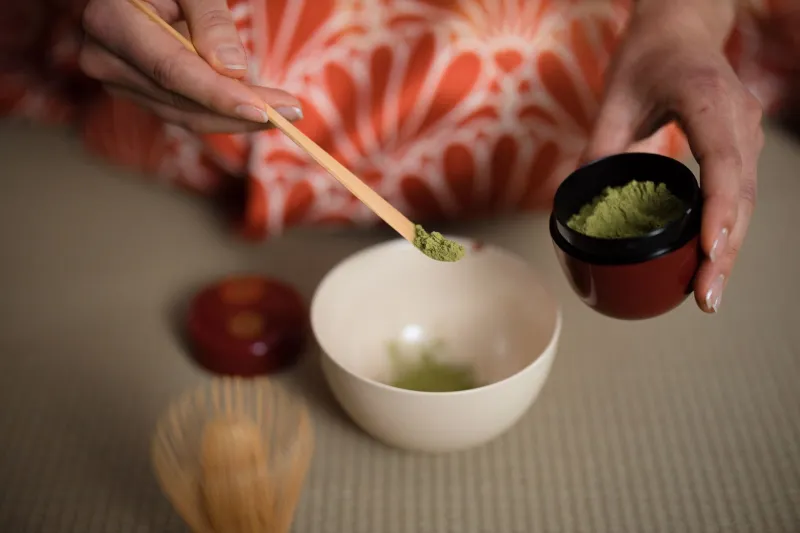
Matcha contains two compounds in concentrations meaningful enough to affect physiology: caffeine and L-theanine. A standard preparation of ceremonial-grade matcha contains roughly 40 to 70 milligrams of caffeine per serving, depending on the quantity of powder used and the preparation method. This is approximately half the caffeine in a standard cup of drip coffee, but significantly more than most teas.
L-theanine, an amino acid found almost exclusively in tea plants, is present in matcha at concentrations far higher than in steeped green tea—a consequence of the shade-growing process and the whole-leaf consumption that matcha involves. L-theanine has demonstrated anxiolytic (anxiety-reducing) and neuroprotective properties in research settings, and it modulates the stimulant effects of caffeine in ways that most matcha drinkers experience as a smoother, more sustained alertness.
Both compounds have known interactions with certain classes of medication. Understanding them individually is useful.
Caffeine-Related Interactions
Caffeine is one of the most extensively studied psychoactive substances in the world, and its interaction profile with medications is well-characterized.
Stimulant medications: Individuals prescribed amphetamine-based medications for ADHD—such as Adderall or Vyvanse—or other stimulants should be aware that combining these with caffeine can amplify cardiovascular effects, including elevated heart rate and blood pressure. This does not necessarily mean matcha is contraindicated, but the total daily caffeine load warrants monitoring.
Blood pressure medications: Caffeine can temporarily raise blood pressure, which may work against the intended effect of antihypertensive medications in some individuals. Those managing hypertension with beta-blockers, ACE inhibitors, or calcium channel blockers should discuss caffeine intake, including matcha, with their prescribing physician.
Blood thinners: Caffeine has a modest effect on platelet aggregation and may interact with anticoagulants such as warfarin. More significantly, matcha's high vitamin K content—a consequence of consuming whole tea leaf—can affect warfarin dosing. Individuals on warfarin are generally advised to maintain consistent vitamin K intake rather than eliminate it, but significant changes in matcha consumption should be communicated to their healthcare provider.
Certain antibiotics: Fluoroquinolone antibiotics, including ciprofloxacin, inhibit the enzyme that metabolizes caffeine in the liver. This can cause caffeine to accumulate in the body at higher-than-expected levels, potentially causing jitteriness, insomnia, or elevated heart rate. During a course of these antibiotics, reducing matcha consumption is a reasonable precaution.
Lithium: Caffeine increases lithium excretion through the kidneys. Conversely, abrupt reduction in caffeine intake can cause lithium levels to rise. For individuals prescribed lithium for bipolar disorder, consistent caffeine habits—rather than sudden increases or decreases in matcha consumption—are important to maintain stable medication levels.
L-Theanine and Medication Considerations
L-theanine's interaction profile is considerably smaller than caffeine's, but it is not entirely without relevance.
Sedatives and anxiolytics: L-theanine has documented calming effects that may theoretically compound the sedative properties of benzodiazepines, sleep aids, or other central nervous system depressants. In practice, the L-theanine content in a standard matcha preparation is unlikely to produce a clinically significant interaction for most individuals, but those on high-dose sedative regimens should note the possibility.
Antihypertensives: Some research suggests L-theanine has mild blood pressure-lowering effects. For individuals already managing blood pressure with medication, this could theoretically contribute to lower readings, though the magnitude of this effect from dietary matcha consumption is generally considered modest.
Health Conditions That Warrant Additional Consideration
Beyond medication interactions, certain underlying health conditions are worth factoring into a decision about daily matcha consumption.
Iron-deficiency anemia: The catechins in matcha, like those in other green teas, can inhibit the absorption of non-heme iron (the form found in plant foods and supplements) when consumed close to a meal or iron supplement. Individuals managing iron-deficiency anemia are generally advised to separate matcha consumption from iron-rich meals or iron supplementation by at least an hour.
Pregnancy and breastfeeding: The American College of Obstetricians and Gynecologists recommends limiting caffeine intake to under 200 milligrams per day during pregnancy. One to two servings of matcha daily falls within this range for most preparations, but total caffeine from all sources should be considered. Additionally, some compounds in green tea may affect folate metabolism at high doses, making moderation particularly important during the first trimester.
Anxiety disorders: While L-theanine tends to moderate caffeine's stimulant effects, individuals with anxiety disorders may find that the caffeine content in matcha—even at moderate levels—exacerbates symptoms. Interestingly, some research suggests L-theanine alone may be beneficial for anxiety, which is why some individuals with anxiety tolerate matcha better than coffee. Individual response varies considerably, and gradual introduction is advisable.
Kidney conditions: Matcha contains oxalates, compounds that can contribute to kidney stone formation in susceptible individuals. Those with a history of calcium oxalate kidney stones are generally advised to moderate their consumption of high-oxalate foods and beverages, including green tea and matcha.
A Note on Dosage and Context
It bears emphasizing that many of the interactions described above are dose-dependent. One carefully prepared bowl of ceremonial matcha per day represents a very different physiological exposure than four concentrated servings. For most healthy adults with no relevant medications or conditions, daily matcha consumption at standard quantities is well-tolerated and associated with measurable health benefits.
The goal of this article is not to introduce uncertainty where none is warranted, but to ensure that those for whom these considerations are relevant have access to clear, accurate information. Matcha is a remarkably safe beverage with a long history of consumption across diverse populations. Knowing its full profile—including its interactions—is simply part of consuming it wisely.
If you are managing a chronic condition or taking prescription medications, bring your matcha habit into the same conversation you have with your healthcare provider about diet and supplements. Most will find it unremarkable. A few may have specific guidance worth hearing.