Afternoon Matcha Without the Midnight Consequence: The Science of Timing Your Second Cup

For a significant portion of matcha drinkers in the United States, an unspoken rule governs the afternoon hours: no bowl after two o'clock. The reasoning feels intuitive — caffeine is a stimulant, stimulants disrupt sleep, therefore matcha consumed past midday must be the enemy of a restful night. It is a logical chain. It is also, in most cases, an oversimplification.
The science of how matcha delivers its caffeine — and how the body processes that delivery — is meaningfully different from what happens when you drink a cup of drip coffee. Understanding those differences does not merely satisfy intellectual curiosity. It changes how you might structure your day, and it may restore confidence in an afternoon ritual that many practitioners have abandoned unnecessarily.
The Caffeine Is Real, but the Delivery Is Different
Matcha does contain caffeine. A standard serving prepared from one to one and a half grams of high-quality powder contains roughly 30 to 50 milligrams — less than a standard eight-ounce cup of coffee, which typically delivers 80 to 100 milligrams or more. That difference in quantity matters, but it is not the whole story.
What distinguishes matcha most fundamentally is the presence of L-theanine, an amino acid found almost exclusively in shade-grown tea plants. Shade cultivation — the practice of covering tea plants for several weeks before harvest to restrict sunlight — causes the plant to accumulate significantly higher concentrations of L-theanine than conventionally grown teas. Premium Japanese matcha, particularly from regions such as Uji and Nishio, is among the richest dietary sources of this compound available.
L-theanine does not block caffeine. Rather, it appears to modulate the rate at which caffeine is absorbed and the manner in which it acts on the central nervous system. Research published in peer-reviewed journals on nutritional neuroscience has consistently demonstrated that the L-theanine-caffeine combination produces a state of alert calm — heightened cognitive focus without the sympathetic nervous system spike that characterizes coffee consumption. In practical terms, this means the energy matcha provides tends to arrive gradually, sustain evenly, and taper gently rather than peaking sharply and crashing hard.
What Your Circadian Rhythm Is Actually Asking For
To understand why afternoon matcha is less disruptive than afternoon coffee, it helps to revisit the basics of adenosine — the neurochemical that governs sleepiness. Adenosine accumulates in the brain throughout the day as a byproduct of neural activity, gradually increasing what researchers call sleep pressure. Caffeine works by occupying adenosine receptors without activating them, temporarily masking the signal that tells your brain it is tired.
The critical variable is caffeine's half-life — the time required for your body to metabolize half of a consumed dose. For most adults, this figure sits between four and six hours, though individual genetics, liver enzyme activity, and medications can shift it considerably. A 200-milligram coffee consumed at 2 p.m. may still have 100 milligrams circulating in your bloodstream at 7 p.m. A 35-milligram matcha serving consumed at the same hour carries a substantially smaller residual load by evening.
This arithmetic is not a license for recklessness. For individuals with heightened caffeine sensitivity, slower metabolic rates, or existing sleep disorders, even modest afternoon caffeine warrants caution. But for the majority of healthy adults operating on a conventional schedule, the math suggests that a single afternoon matcha bowl is unlikely to be the culprit behind sleeplessness — particularly when compared to the cumulative caffeine load many Americans carry from coffee, energy drinks, and caffeinated sodas throughout the day.
Practical Timing Recommendations for Different Schedules
There is no universal cutoff time that applies equally to every person. What the science supports, however, is a framework based on individual sleep targets rather than an arbitrary clock position.
For those targeting a 10 p.m. to 11 p.m. bedtime: A matcha serving consumed before 3 p.m. should, for most adults, fall well outside the window during which residual caffeine meaningfully interferes with sleep onset. The L-theanine-modulated absorption curve means the stimulating peak arrives later and lower than an equivalent coffee dose, providing additional buffer.
For early risers targeting a 9 p.m. bedtime: Consider moving the afternoon bowl to no later than 1 p.m. to 2 p.m. The earlier your sleep target, the earlier your caffeine cutoff should be, regardless of the source.
For shift workers or those on non-traditional schedules: The same principle applies — count backward from your intended sleep time by six to seven hours and treat that as your conservative matcha cutoff. Chronobiology research consistently shows that sleep quality is more tightly linked to the timing of caffeine relative to sleep onset than to the absolute hour on a clock.
For those who are caffeine-sensitive: If you notice that even morning matcha produces restlessness or that sleep quality is inconsistent, consider a lower-dose preparation — half a gram of powder rather than a full serving — or explore a ceremonial-grade preparation whisked with cooler water, which may extract slightly less caffeine while preserving the flavor complexity and L-theanine content.
The Anxiety About Sleep Is Often the Greater Disruptor
There is a dimension to this conversation that goes beyond biochemistry. Many wellness-oriented Americans have developed a form of anticipatory anxiety around caffeine and sleep — a vigilance that can itself elevate cortisol levels and interfere with sleep quality independent of any actual chemical stimulation. The fear of the afternoon matcha bowl, in some cases, may be doing more physiological damage than the bowl itself.
This is not to dismiss legitimate individual sensitivity. It is, rather, an invitation to approach the question empirically rather than reflexively. If you have avoided afternoon matcha based on assumption rather than personal experience, consider a structured two-week trial: consume a single bowl between 1 p.m. and 3 p.m. for two weeks and track sleep onset time, perceived sleep quality, and morning energy levels in a simple journal. The data you collect will be more informative than any generalized guideline.
Choosing the Right Matcha for an Afternoon Practice
Not all matcha is equally suited to an afternoon preparation. Ceremonial-grade powders, with their higher L-theanine concentrations and more refined amino acid profiles, tend to produce the smoothest energy curve — a particularly desirable quality when the goal is sustained afternoon focus without overstimulation. Culinary-grade matcha, while excellent for cooking and baking, often delivers a sharper, more astringent experience that may feel less appropriate as a mindful afternoon beverage.
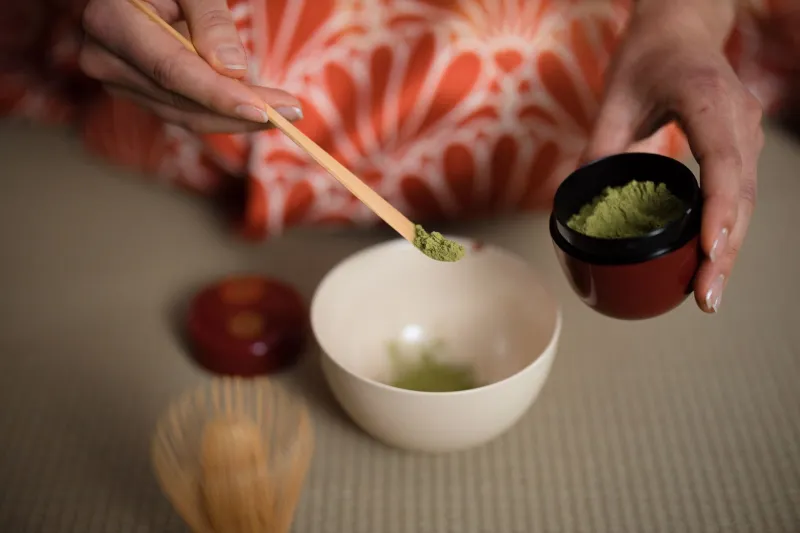
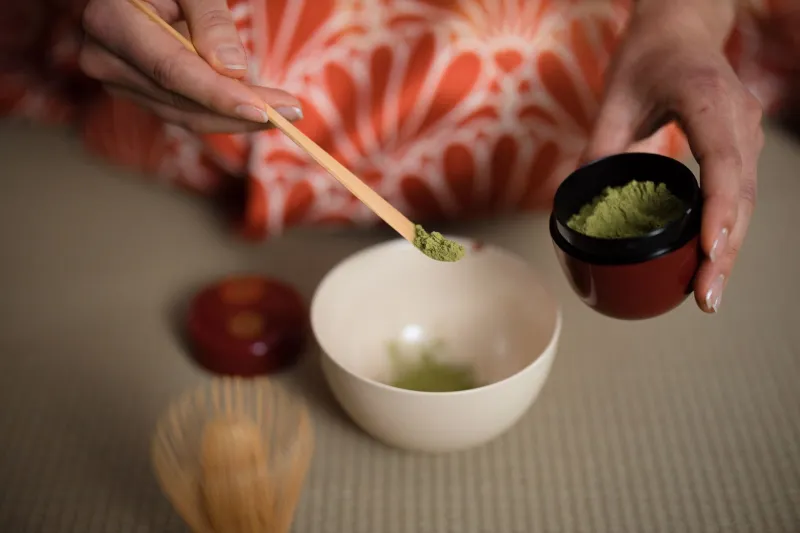
For an afternoon bowl, consider preparing a thin preparation — usucha style — using water at approximately 160 to 175 degrees Fahrenheit. This temperature range preserves the delicate umami compounds and minimizes bitterness, resulting in a cup that feels inherently calming rather than stimulating. Pair it with a quiet moment away from screens, and the ritual itself becomes a form of afternoon restoration rather than a source of concern.
A More Informed Relationship With Your Practice
Matcha's relationship with caffeine is one of the most misunderstood aspects of the practice among new and experienced drinkers alike. The compound is present, its effects are real, and individual variation matters enormously. But the categorical avoidance of afternoon matcha — a practice that has become something of an unexamined orthodoxy in US wellness culture — is not well-supported by the available evidence for most healthy adults.
At Kagura Matcha, we believe that an informed practice is a sustainable one. When you understand why your bowl behaves as it does, you can make choices that genuinely serve your body and your schedule rather than choices borrowed from generalizations that may not apply to you at all. The afternoon bowl, approached thoughtfully, may be exactly what your day has been missing.