When Waiting Becomes Wisdom: The Surprising Truth About Aged Matcha and the Flavors Time Unlocks
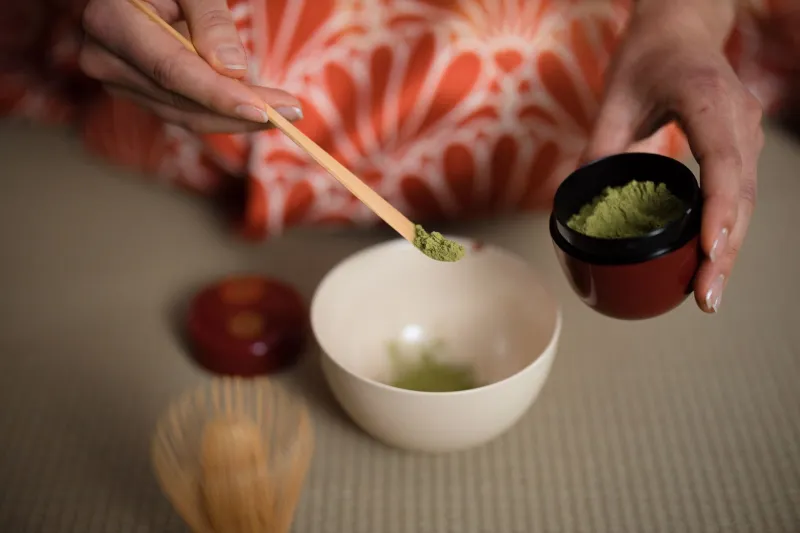
There is a particular kind of confidence that comes from opening a newly arrived tin of matcha. The color is vivid, almost electric. The aroma rises to meet you immediately—grassy, marine, faintly sweet. Everything about the experience signals freshness, and in American food culture, freshness is the highest virtue a product can possess.
But spend enough time in serious tea circles, or speak with a Japanese tea merchant who has been sourcing from the same Uji farms for decades, and you will encounter a more complicated idea: that some matcha, under the right conditions, does not merely survive the passage of time. It deepens because of it.
This is not a universal rule, and it is not an invitation to let your matcha go stale. It is, however, a genuinely fascinating area of food science that challenges assumptions most Western consumers have never thought to question.
The Oxidation Question: Enemy or Ally?
When matcha is exposed to oxygen, light, and heat, it degrades. The vivid chlorophyll that gives ceremonial-grade powder its characteristic jade hue breaks down into pheophytin, a compound that produces dull, brownish tones. Catechins—the polyphenol antioxidants responsible for much of matcha's health profile—oxidize and diminish. The result is the flat, hay-like flavor that characterizes a neglected tin.
This is the oxidation story most people know, and it is accurate as far as it goes.
What is less discussed is that controlled, minimal oxidation—the kind that occurs in a properly sealed container stored away from light and temperature fluctuation—can facilitate a different set of chemical reactions altogether. Amino acids, particularly theanine, interact gradually with other compounds present in the leaf. Volatile aromatic molecules shift in proportion. The sharp, sometimes astringent top notes that characterize a very fresh powder can soften, allowing deeper, more resinous qualities to emerge.
Think of it less like fruit ripening past its prime and more like the rounding that occurs in a well-made olive oil during its first few months after pressing—a period when certain aggressive green notes settle into something more integrated and pleasurable.
Umami and the Slow Conversation Between Molecules
Umami—the fifth taste, often described as savory depth or a pleasant lingering fullness on the palate—is one of matcha's most prized qualities in Japanese tea culture. It derives primarily from free amino acids, with L-theanine playing the central role. High-grade matcha from shaded cultivations is rich in these compounds, which is precisely why ceremonial grades are shaded for three to four weeks before harvest: the deprivation of sunlight triggers the plant to accumulate theanine rather than convert it into catechins.
Over time, in sealed, cool, dark storage, theanine and related amino acids continue a slow chemical dialogue with the sugars and other organic compounds present in the powder. This Maillard-adjacent process—not a full Maillard reaction, which requires heat, but a related low-temperature analog—can produce trace amounts of new flavor compounds that contribute to what experienced tasters describe as a more "settled" or "integrated" character.
The result is not better matcha in an absolute sense. It is different matcha—one in which the brightness has given way to something mellower, where the umami registers more prominently because the competing top notes have quieted.
What Japanese Storage Tradition Understood Long Before the Science
The practice of cellaring tea is not new in Japan. While matcha does not age the way that certain pu-erh teas or aged oolongs do—those are fermented products governed by microbial activity, a different process entirely—Japanese tea merchants and serious practitioners have long understood that storage conditions shape outcome.
Traditionally, high-quality tencha (the whole-leaf precursor to matcha, before it is stone-ground into powder) was stored in sealed ceramic vessels in cool, dark storerooms. The grinding was often timed not merely to the harvest calendar but to intended use—some teas ground immediately for seasonal ceremonies, others rested longer to develop a particular character suited to a specific style of preparation.
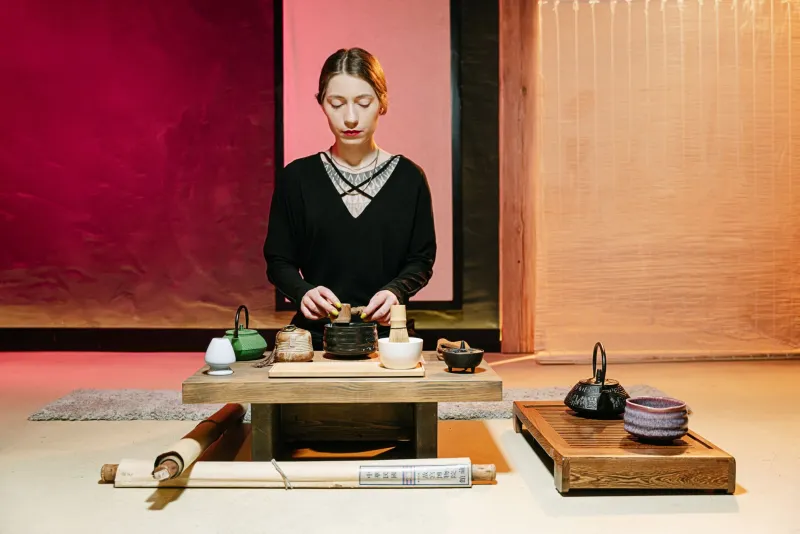
This temporal intentionality is embedded in the philosophy of Japanese tea culture more broadly. The concept of ma—the meaningful pause, the productive interval—applies not only to the silence between gestures in a tea ceremony but to the time a tea is allowed to rest before it is consumed. Patience, in this tradition, is not passive. It is a form of skilled stewardship.
The Practical Reality for American Matcha Drinkers
None of this means you should deliberately age your matcha as a general practice. The conditions required to allow beneficial development rather than simple degradation are specific and unforgiving.
Temperature stability is paramount. Fluctuating between warm and cool—the inside of a pantry near a stove, for instance—accelerates the unwanted oxidation that leads to flat, stale flavor. A consistent cool environment, such as a dedicated section of your refrigerator or a cool, dark cabinet away from heat sources, is essential.
The container matters equally. Matcha stored in its original sealed tin, or transferred to an airtight, opaque vessel, is shielded from the two primary drivers of degradation: light and oxygen. Once opened, every subsequent exposure to air begins a clock. This is why premium matcha is typically packaged in quantities meant to be consumed within four to eight weeks of opening.
What this means practically is that an unopened tin of high-quality matcha, stored correctly, may offer a subtly different but not necessarily inferior experience at four months than it did at four weeks. The vibrancy will have shifted. The sharpness will have softened. Whether that is preferable is a matter of personal taste—and of being attentive enough to notice the difference at all.
Learning to Taste the Difference
The most meaningful way to engage with this idea is not theoretical. It is sensory.
If you have two tins of the same matcha at different stages—one freshly opened, one that has been properly stored for several months—prepare them side by side under identical conditions. Use the same water temperature, the same ratio, the same whisking technique. Then taste them without judgment, the way a sommelier approaches two vintages of the same wine.
Notice where the brightness lives in the fresh bowl. Notice whether the older preparation offers something the fresh one does not—a certain roundness, perhaps, or a more persistent finish. Neither experience is wrong. Both are instructive.
This is, in essence, what mindful matcha practice asks of us: not to consume reflexively according to received assumptions, but to be genuinely present with what is in the bowl. The Western instinct to privilege newness above all else is one worth examining at the rim of a ceramic chawan, in a quiet moment, with enough patience to actually taste what time has done.
Sometimes the answer will be that fresh is, indeed, better. And sometimes—if the storage was careful, the grade was high, and the waiting was deliberate—you will discover that your matcha has been quietly becoming something worth the pause.