Beyond the Bowl: The Science-Backed Wellness Applications of Matcha You Have Not Tried Yet
For most American wellness enthusiasts, matcha entered daily life through a latte. It was the green alternative to coffee, the Instagram-worthy morning ritual, the drink that promised calm focus without the spike-and-crash of espresso. All of that is well-founded. But it is also, it turns out, only the beginning of what this powdered green tea is capable of.
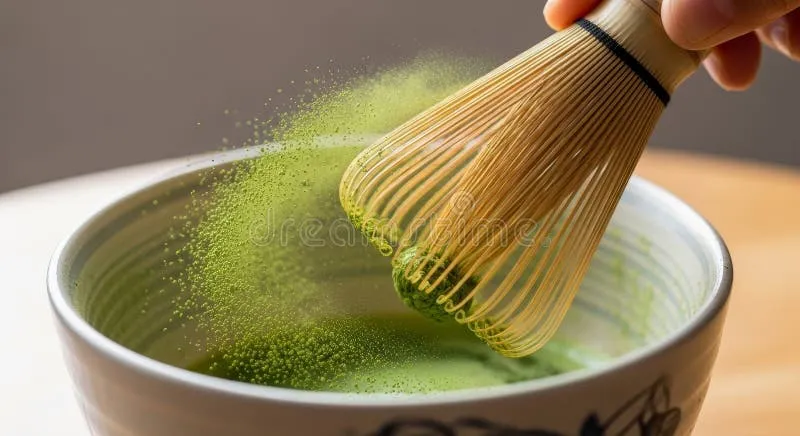
Ceremonial-grade matcha—the kind shade-grown in Japan's finest tea gardens, stone-milled to a fine powder, and produced with the full leaf intact—is among the most nutrient-dense forms in which you can consume Camellia sinensis. Its unique composition, which includes high concentrations of epigallocatechin gallate (EGCG), L-theanine, chlorophyll, and a broad spectrum of antioxidants, makes it relevant to several domains of wellness that have nothing to do with what you put in a mug.
Below, we examine five of the most compelling emerging applications, grounded in current research.
1. Topical Skincare: Matcha as an Anti-Inflammatory Agent
The cosmetic industry has been quietly incorporating green tea extracts into serums and masks for over a decade, but the shift toward whole matcha powder in DIY and small-batch skincare formulations is more recent—and more interesting.
EGCG, matcha's primary catechin, has demonstrated meaningful anti-inflammatory and antioxidant activity in topical applications. A review published in Nutrients (2019) highlighted EGCG's capacity to neutralize reactive oxygen species on the skin's surface, which contributes to the visible signs of photoaging, acne inflammation, and general oxidative stress. The chlorophyll that gives matcha its distinctive green color also exhibits antimicrobial properties that may support skin clarity.
A straightforward topical application involves mixing a half-teaspoon of high-quality matcha with enough plain yogurt or raw honey to form a paste, applying it to clean skin for ten to fifteen minutes, and rinsing thoroughly. The lactic acid in yogurt supports gentle exfoliation, while the matcha delivers its antioxidant payload directly to the skin barrier.
One important note: the quality of matcha matters considerably here. Culinary-grade powder, which may contain oxidized or lower-quality leaves, will not carry the same concentration of active compounds as ceremonial-grade matcha. What you apply to your skin deserves the same sourcing consideration as what you consume.
2. Post-Workout Recovery: Reducing Exercise-Induced Oxidative Stress
Intense physical exercise, while broadly beneficial, generates a significant oxidative burden. Free radicals produced during high-intensity training can contribute to delayed onset muscle soreness (DOMS) and, over time, to cellular damage if the body's natural antioxidant defenses are insufficient.
This is where matcha's antioxidant density becomes particularly relevant. A study published in Nutrition (2018) found that participants who consumed matcha before a cycling test showed reduced markers of exercise-induced oxidative stress compared to a control group, alongside faster recovery of muscle function. The researchers attributed these effects primarily to the catechin content, with EGCG again playing a leading role.
For practical integration into a recovery protocol, consider consuming matcha thirty to sixty minutes before training rather than immediately after—this allows the catechins to reach peak plasma concentration during the period of greatest oxidative load. A simple preparation of matcha whisked into cold water with a small amount of honey provides hydration, antioxidants, and a modest energy stimulus without the gastrointestinal disruption that some athletes experience with caffeinated pre-workout supplements.
The L-theanine present in matcha also warrants mention here: its capacity to modulate the adrenergic response means that the caffeine in matcha tends to produce a more measured physiological activation than equivalent doses of coffee, which can be advantageous for endurance activities requiring sustained output rather than explosive bursts.
3. Sustained Cognitive Energy for Deep Work
The cognitive performance applications of matcha are perhaps the most extensively studied of those discussed here, though they are still frequently undersold in popular wellness media. The compound most responsible for matcha's distinctive effect on mental clarity is not caffeine alone, but the synergistic relationship between caffeine and L-theanine.
L-theanine is an amino acid found almost exclusively in tea plants, and it promotes alpha-wave activity in the brain—the same neural pattern associated with relaxed alertness and creative flow states. When combined with caffeine, as it naturally is in matcha, it appears to sharpen attentional focus while simultaneously blunting the anxiety and cardiovascular overstimulation that caffeine can produce in isolation.
A 2008 study in Nutritional Neuroscience demonstrated that the combined L-theanine and caffeine preparation improved both speed and accuracy on cognitively demanding tasks more effectively than either compound alone. For knowledge workers, writers, or anyone engaged in extended periods of concentrated effort, this makes matcha a functionally distinct tool from coffee—less about the spike of activation, more about sustaining a productive cognitive baseline across two to four hours of focused work.
The practical implication: prepare your matcha before beginning a demanding task rather than reaching for it reactively when fatigue sets in. Its onset is gradual, its peak is steady, and its decline is gentle.
4. Matcha as a Complement to Meditation and Breathwork
This application is the least clinical of the five, but it is grounded in a convergence of physiological and traditional evidence that deserves serious attention. In Japanese Zen Buddhist practice, tea and meditation have been intertwined for centuries. Monks consumed matcha before long periods of seated meditation precisely because it supported wakefulness without agitation—a state that serious contemplative practitioners recognize as essential for sustained practice.
Modern research on L-theanine's promotion of alpha-wave activity provides a neurochemical explanation for what the monks observed experientially. Alpha waves are associated not only with relaxed focus but also with the early stages of meditative absorption. Consuming matcha twenty to thirty minutes before a meditation session or breathwork practice may, for some practitioners, lower the threshold for entering a productive contemplative state.
Breathwork practitioners in particular—those working with techniques such as box breathing, coherent breathing, or extended exhale protocols—may find that matcha's anxiolytic effect on the nervous system complements the parasympathetic activation these practices seek to induce. Rather than working against the calming intention of breathwork, matcha's caffeine-theanine profile appears to support it.
This is, of course, individual. Some meditators prefer complete abstinence from stimulants before practice. But for those who find the transition into stillness difficult, matcha offers a physiologically coherent on-ramp.
5. Gut Health: An Emerging Area of Investigation
The research here is earlier-stage than the applications above, but it is developing rapidly enough to merit attention. Several studies have examined green tea catechins' influence on the gut microbiome, finding that EGCG may selectively inhibit the growth of certain pathogenic bacteria while supporting the proliferation of beneficial strains, including Lactobacillus species.
A 2020 study in Food Chemistry found that regular green tea consumption was associated with favorable shifts in microbiome composition, with effects that appeared dose-dependent. Whether these findings translate directly to matcha consumption—and at what quantities—remains an active area of investigation. What is clear is that the gut-brain axis, which connects microbiome health to mood, cognition, and stress response, is a plausible mechanism through which matcha's broader wellness effects may be amplified.
For now, the practical takeaway is straightforward: regular, moderate consumption of high-quality matcha as part of a varied, whole-food diet is unlikely to be anything but supportive of gut health, and the emerging evidence suggests it may be actively beneficial.
A Closing Note on Quality
Across all five of these applications, one variable consistently determines the magnitude of benefit: the quality of the matcha itself. The catechin concentrations, the L-theanine content, and the chlorophyll density that underpin each of these effects are products of shade-growing practices, careful harvesting, and stone-milling—processes that define ceremonial-grade matcha and that are absent from lower-tier powders.
Matcha is not a monolith. What you source matters as much as how you use it. At Kagura Matcha, every product we offer traces directly to verified Japanese cultivation regions, because we believe that the full promise of this plant is only available when the plant has been treated with the care it deserves.
The cup is a starting point. What lies beyond it is considerable.