Calm Without the Crash: The Neurochemistry That Makes Matcha's Focus Uniquely Sustainable
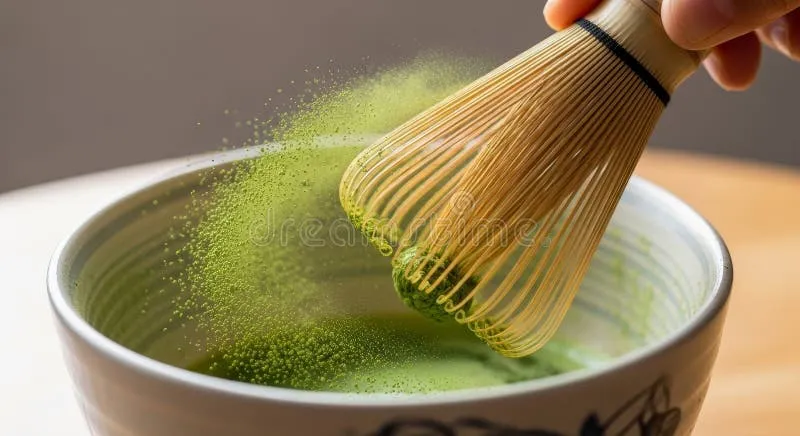
Photo: matcha powder whisk ceramic bowl close up green tea preparation Japanese, via thumbs.dreamstime.com
Why Your Morning Beverage Choice Changes More Than You Think
For millions of Americans, the morning ritual of caffeine is non-negotiable. Yet a growing number of wellness-conscious individuals are noticing something unexpected after making the switch from coffee to matcha: the edge is still there, but the anxiety is not. The heart does not race. The hands do not tremble. And several hours later, there is no sudden descent into fatigue.
This is not coincidence, and it is not placebo. It is the result of a precise biochemical relationship that has been present in the Japanese tea tradition for over eight centuries — one that modern neuroscience is now beginning to articulate with remarkable clarity.
The Molecule at the Center of Everything: L-Theanine
L-theanine (technically, L-γ-glutamylethylamide) is a non-proteinogenic amino acid found almost exclusively in the Camellia sinensis plant. While trace amounts exist in certain mushrooms, tea — and particularly shade-grown Japanese matcha — represents by far the most bioavailable dietary source for humans.
What makes L-theanine neurologically significant is its structural resemblance to glutamate, one of the brain's primary excitatory neurotransmitters. Because of this similarity, L-theanine can cross the blood-brain barrier with relative ease, typically reaching detectable levels in the brain within 30 to 60 minutes of consumption. Once there, it influences multiple neurological pathways simultaneously.
Perhaps most notably, L-theanine promotes the production of alpha brain waves — the same neural oscillations associated with a state of relaxed alertness. Researchers at the University of Surrey demonstrated in a 2007 study that a single 50mg dose of L-theanine was sufficient to significantly increase alpha wave activity compared to placebo. For context, a single serving of ceremonial-grade matcha typically delivers between 25mg and 46mg of L-theanine, depending on preparation.
Additionally, L-theanine modulates levels of GABA (gamma-aminobutyric acid), the brain's principal inhibitory neurotransmitter, while simultaneously influencing dopamine and serotonin pathways. The net result is a measurable reduction in perceived stress and anxiety without any accompanying sedation — a combination that pharmacologists describe as uniquely valuable.
The Caffeine Equation: Why Synergy Matters
Matcha does contain caffeine — typically between 30mg and 70mg per serving, depending on grade and preparation — and this is an important part of the equation rather than a complicating factor. The critical distinction lies in how L-theanine modifies caffeine's effects on the central nervous system.
Caffeine operates primarily by blocking adenosine receptors. Adenosine is the neurotransmitter responsible for building sleep pressure throughout the day; by blocking its receptors, caffeine temporarily suppresses fatigue signals and increases neural firing rates. This mechanism is effective, but it comes with well-documented side effects: elevated cortisol, increased heart rate, heightened anxiety, and — once the caffeine clears — a pronounced energy crash as adenosine floods the previously blocked receptors.
L-theanine does not eliminate caffeine's adenosine-blocking action. Instead, it appears to selectively attenuate caffeine's more disruptive effects. A 2008 randomized controlled trial published in Nutritional Neuroscience found that the combination of L-theanine and caffeine — at ratios comparable to those found in matcha — produced significantly better outcomes on attention-switching tasks and reduced susceptibility to distraction compared to either compound in isolation. Participants also reported lower headache incidence and reduced fatigue compared to caffeine alone.
The mechanism appears to involve L-theanine's capacity to dampen excessive sympathetic nervous system activation — essentially smoothing the jagged peaks of caffeine's stimulant curve into something more sustained and physiologically manageable.
Why Shade-Growing Changes Everything
Not all green tea contains equivalent L-theanine concentrations, and this is where the distinction between matcha and other tea products becomes scientifically meaningful. Traditional Japanese matcha is produced from tea plants (tencha cultivars) that are covered for approximately three to four weeks before harvest, dramatically reducing their exposure to direct sunlight.
This shade-growing process, known in Japan as kabuse or tana cultivation, triggers a compensatory botanical response: the plant synthesizes greater quantities of chlorophyll (which accounts for matcha's vivid green color) and significantly increases its L-theanine content. Sunlight normally catalyzes the conversion of L-theanine into catechin polyphenols within the leaf. By restricting that sunlight, the farmer essentially preserves far more of the amino acid in its bioactive form.
This is why sourcing matters profoundly. Matcha produced outside traditional Japanese growing regions — or from plants not subjected to proper shade cultivation — may deliver a fraction of the L-theanine content that makes the neurological effects described above possible.
Preparation as a Variable, Not a Formality
The way you prepare matcha directly influences the concentration of L-theanine in your cup, and by extension, the quality of the cognitive experience you receive.
Water temperature is the most consequential variable. L-theanine is a thermolabile compound, meaning it degrades under excessive heat. Preparing matcha with water above 175°F (80°C) begins to compromise both the amino acid content and the delicate umami flavor profile that L-theanine contributes. At Kagura Matcha, we consistently recommend water heated to between 160°F and 175°F for optimal extraction of beneficial compounds without degradation.
The ratio of powder to water also matters. A traditional usucha (thin tea) preparation — approximately 1.5 to 2 grams of matcha whisked into 2 to 3 ounces of water — concentrates both L-theanine and caffeine at levels most consistent with the research literature on cognitive benefits. Diluting matcha into large volumes of water, while pleasant, reduces per-serving bioactive compound delivery.
Finally, quality of the powder itself sets the ceiling for what is biochemically possible. Ceremonial-grade matcha, stone-ground from the first harvest of shade-grown tencha, consistently delivers superior amino acid profiles compared to culinary-grade alternatives.
Integrating the Science Into a Sustainable Practice
Understanding the neurochemistry of matcha is not merely academic. It offers a practical framework for making intentional choices about when and how to consume it for maximum benefit.
The L-theanine and caffeine combination appears most effective for tasks requiring sustained attention, creative problem-solving, and working memory — making mid-morning matcha preparation an especially rational choice for knowledge workers. The absence of a significant energy crash also means that a well-timed afternoon serving, prepared at appropriate concentration, does not carry the same risk of sleep disruption as an equivalent late-day coffee.
For those managing anxiety or stress sensitivity, matcha's biochemical profile offers a genuinely evidence-supported alternative to high-caffeine beverages. The research does not suggest that matcha is a therapeutic intervention, but it does confirm that the calm focus its drinkers describe is a measurable, reproducible physiological state — not simply a preference or a story we tell ourselves.
That distinction matters. It is the difference between a trend and a practice worth building a life around.