Wired Differently: What Happens to Your Brain When You Trade Coffee for Matcha
The morning ritual of millions of Americans begins with coffee. It is a deeply embedded cultural practice, an economic cornerstone, and for many, a non-negotiable condition of functional existence. So when a meaningful and growing segment of productivity-focused professionals—executives, athletes, therapists, software engineers—begins voluntarily replacing that ritual with a bowl of whisked matcha, it warrants serious examination rather than reflexive dismissal.
This is not a polemic against coffee. Coffee is a genuinely remarkable beverage with its own well-documented physiological benefits. What it is, instead, is a careful look at why the matcha switch is happening, what the neuroscience actually supports, and where the trade-offs are real versus overstated.
The Caffeine Delivery Problem
Both matcha and coffee contain caffeine. That much is settled. A standard eight-ounce cup of drip coffee delivers roughly 95 milligrams of caffeine; a two-gram serving of ceremonial-grade matcha yields approximately 70 milligrams. On raw numbers alone, coffee wins the stimulant race.
But caffeine delivery is not simply a matter of quantity. It is a matter of mechanism. Coffee's caffeine enters the bloodstream rapidly—peak plasma concentration is typically reached within 30 to 60 minutes of ingestion—producing the acute alertness spike that coffee drinkers know well. The corresponding drop, colloquially called the afternoon crash, occurs as adenosine receptors rebound and blood glucose fluctuates in response to the adrenal stimulation.
Matcha's caffeine follows a meaningfully different trajectory. The presence of L-theanine—an amino acid found almost exclusively in shade-grown tea plants and in particularly high concentrations in quality matcha—modulates how caffeine is absorbed and processed. Research published in Nutritional Neuroscience and subsequently replicated across multiple independent studies has demonstrated that L-theanine and caffeine in combination produce a state of what researchers describe as "alert calmness": sustained attention without the anxiety or hyperarousal that isolated caffeine can generate.
The mechanism is not fully understood, but the prevailing model suggests that L-theanine promotes alpha brain wave activity—the neural state associated with relaxed focus—while simultaneously attenuating caffeine's more excitatory effects on the central nervous system. The result, for many practitioners, is a longer, smoother arc of mental clarity rather than a spike followed by a valley.
What Wellness Coaches Are Observing
Practitioners working daily with high-performing clients report consistent patterns in those who have made the transition. The most frequently cited shift is not an increase in raw energy—most describe their matcha energy as quieter than coffee's—but rather an improvement in what might be called sustained executive function: the capacity to focus on a single complex task for an extended period without the restlessness or distraction that can accompany a strong coffee dose.
Sleep quality is another variable that emerges repeatedly in these conversations. Because matcha's caffeine release is more gradual and its half-life interaction with L-theanine appears to attenuate the prolonged cortisol elevation associated with coffee consumption, many practitioners who switch report fewer disruptions to sleep onset—particularly when matcha is consumed before noon.
It is worth noting that individual variation is significant here. Caffeine metabolism is substantially influenced by genetics, specifically variants in the CYP1A2 enzyme gene that determines how quickly the liver processes caffeine. Slow metabolizers—estimated to comprise roughly half the population—may experience coffee's stimulant effects for six hours or longer, making the gentler arc of matcha particularly relevant to their wellbeing.
The Biohacking Community's Case for Matcha
Within the broader biohacking movement—a loosely defined community of individuals who apply data-driven experimentation to optimize human performance—matcha has attracted serious attention for reasons that extend beyond caffeine management. EGCG (epigallocatechin gallate), matcha's primary catechin, has been studied for its effects on metabolic function, neuroinflammation, and cognitive aging. While the clinical evidence for many of these applications remains preliminary, the mechanistic rationale is sufficiently grounded to sustain genuine scientific interest.
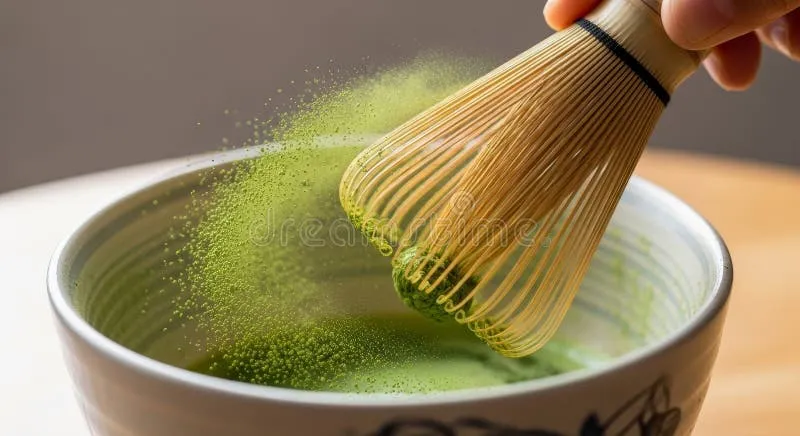
The ritual dimension of matcha preparation also resonates strongly within this community, perhaps unexpectedly. Biohackers, who tend to be methodical and protocol-oriented, often find that the structured act of measuring, heating water to a precise temperature, sifting, and whisking functions as a form of intentional cognitive priming—a brief, focused practice that signals to the nervous system that a period of concentrated work is about to begin. Coffee, consumed quickly and often on the move, rarely offers the same transitional clarity.
Where Coffee Retains Its Legitimate Advantages
Honesty requires acknowledging what matcha does not offer. For individuals who require a rapid, high-intensity stimulant effect—early-morning physical training, shift work with abrupt schedule changes, or circumstances demanding immediate alertness—coffee's faster-acting caffeine profile is genuinely superior. The research on coffee and certain types of short-burst cognitive performance, including reaction time and simple attention tasks, consistently favors the sharper caffeine spike.
Coffee also carries an impressive body of epidemiological evidence associating regular consumption with reduced risk of Parkinson's disease, type 2 diabetes, and certain liver conditions. These findings are robust and should not be minimized. The choice between matcha and coffee is not, ultimately, a choice between health and harm; it is a choice between two different physiological profiles, each with its own strengths.
There is also the matter of taste, preference, and cultural identity. Coffee is woven into the social fabric of American life in ways that matcha is only beginning to approach. For many people, the morning cup of coffee is inseparable from a sense of comfort, routine, and belonging—and those psychological dimensions of a ritual carry their own wellness value.
Making a Considered Transition
For those genuinely curious about shifting their morning practice toward matcha, a measured approach is more likely to yield useful insight than an abrupt abandonment of coffee. Consider beginning with a two-week trial during which matcha replaces the first coffee of the day while any subsequent cups remain unchanged. Keep a brief daily log noting energy levels at 90 minutes, focus quality at three hours, and sleep onset quality at night.
The quality of the matcha matters considerably in this experiment. Commodity-grade powder—often oxidized, coarsely milled, and low in L-theanine—will not produce the physiological effects that make this comparison meaningful. Ceremonial-grade, shade-grown matcha from a verified Japanese origin, prepared with water at approximately 175°F and whisked to a consistent froth, is the appropriate baseline.
The Deeper Question
Beyond the neurochemistry, the matcha switch often prompts a more fundamental question: What do you actually want from your morning? If the answer is maximum short-term stimulation, coffee remains the more efficient tool. If the answer is a sustained, grounded state of attention—the kind that supports deep work, creative thinking, and the management of complexity over hours rather than minutes—the evidence for matcha's unique profile is both real and worth taking seriously.
At Kagura Matcha, we believe that the ritual of preparation is inseparable from the physiological outcome. The two minutes spent whisking a bowl of matcha are not incidental to its effects; they are part of them. That intentionality, compounded daily, is what distinguishes a wellness practice from a mere caffeine delivery system—and it is what makes the comparison between matcha and coffee, ultimately, a conversation about more than chemistry.