Why the Best Matcha You've Ever Bought Might Be the Hardest to Love at First
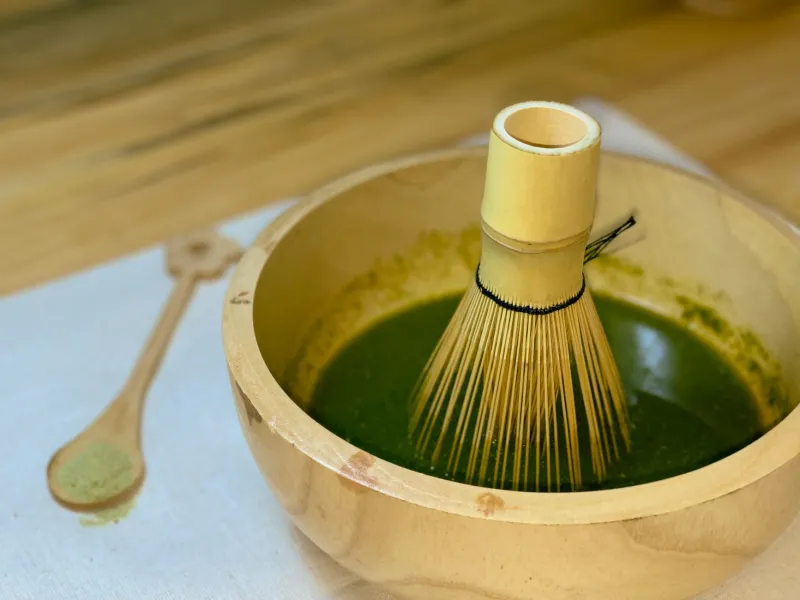
There is a peculiar moment that many matcha enthusiasts encounter at some point in their journey. They invest in a premium, single-origin ceremonial-grade powder—the kind shade-grown for weeks and stone-milled to order in Uji or Nishio—and they brew it with care. They lift the bowl. They take the first sip.
And they are disappointed.
Not because the matcha is bad. In fact, it may be the finest tea they have ever tasted. The disappointment arises from a far more interesting problem: their palate was not ready for it.
The Expectation Gap
Most Western drinkers encounter matcha for the first time through a latte at a coffee chain, a smoothie, or a culinary-grade powder blended into baked goods. These formats are deliberately designed to be approachable—sweetened, diluted, or paired with dairy to soften any sharp edges. The matcha flavor that registers as familiar and pleasant in these contexts is, by design, a muted version of the real thing.
When a drinker then moves to a high-grade ceremonial matcha prepared traditionally—whisked with water alone, no sweetener, no milk—the experience can feel jarring. The umami is pronounced. There may be a deep, almost marine grassiness. A gentle bitterness lingers on the back of the palate. None of these qualities are flaws. In Japanese tea culture, they are precisely what a skilled cultivator and processor works to achieve. But to a palate calibrated by sweeter, more forgiving preparations, they can read as "wrong."
This is what might be called the matcha paradox: the better the quality, the more likely it is to confuse an untrained palate.
Liking Versus Appreciating: A Crucial Distinction
Food psychologists have long distinguished between hedonic response—the immediate, reflexive pleasure of tasting something—and aesthetic appreciation, which involves learned recognition of complexity and craft. These two responses are not always aligned, and they do not need to be in order to coexist.
Consider the parallel with fine wine or aged cheese. A person raised on mild cheddar may find a raw-milk Comté overwhelming at first encounter. A lifelong soda drinker may find a dry Burgundy unpleasant before they have developed a framework for understanding what they are tasting. Neither reaction indicates that the Comté or the Burgundy is inferior. It indicates that appreciation is a skill, and skills are acquired.
High-grade matcha operates on the same principle. The umami depth that characterizes premium ceremonial powder—produced by elevated L-theanine content from prolonged shade cultivation—is a marker of quality, not a defect. The grassy, vegetal brightness signals freshness and careful processing. The mild bitterness, when present, reflects a balance of catechins that lesser grades simply do not contain in the same proportion. These are qualities worth learning to recognize.
What Your Palate Has Actually Been Trained to Expect
The average American palate has been shaped by decades of food culture that privileges sweetness, creaminess, and intensity of flavor. Subtlety is not always rewarded. Products that succeed commercially tend to be optimized for immediate palatability—bold, accessible, and consistent.
Culinary-grade matcha, by contrast, is often higher in bitterness and lower in umami than ceremonial grades, but it is almost always consumed with significant additions: sugar, oat milk, vanilla, honey. These additions do not merely complement the matcha; they largely replace its character with something more familiar. The matcha becomes a color and a vague earthy note in a drink that is, at its core, a sweet beverage.
This is not a criticism of culinary preparations. They have their place, and they have introduced millions of people to matcha who might otherwise never have tried it. But they do create a sensory expectation that ceremonial matcha was never designed to meet.
Practical Strategies for Retraining Your Palate
The good news is that palate development is not a matter of talent or sensitivity. It is a matter of deliberate, repeated exposure combined with a shift in the questions you ask while tasting.
Begin with context, not comparison. Rather than evaluating premium matcha against your previous matcha experiences, try approaching it as an entirely new beverage category. What do you actually notice? Where does the flavor land on your tongue? Does the finish linger or dissipate quickly? Curiosity is a more useful frame than judgment.
Adjust your preparation variables gradually. If the flavor profile of a high-grade matcha feels too intense initially, a small reduction in powder quantity—rather than adding sweetener—preserves the integrity of the tea while moderating the experience. Over several weeks, you can incrementally increase the ratio as your palate adjusts.
Pair intentionally. Traditional Japanese wagashi (confections served alongside tea) are designed to complement, not mask, the flavor of matcha. A small piece of yokan, a rice cracker, or even a plain dark chocolate square can make the umami and bitterness of ceremonial matcha far more legible and pleasurable without obscuring its character.
Taste repeatedly and comparatively. One of the most effective ways to calibrate your palate is to taste two grades side by side under identical preparation conditions. The differences in texture, color, aroma, and finish become far more apparent in direct comparison, and those differences begin to carry meaning.
The Investment That Pays Differently
Premium matcha asks something of the drinker that most consumables do not: patience. It is not designed to deliver immediate, uncomplicated pleasure. It is designed to reward attention, preparation, and repeated engagement.
For those willing to make that investment, the return is considerable. Once the palate learns to recognize and seek out the qualities that define high-grade ceremonial matcha—the silky texture, the sustained umami, the clean, resonant finish—lesser preparations begin to feel thin by comparison. The taste memory recalibrates. What once seemed overwhelming becomes the standard.
This is not elitism. It is simply the nature of acquired taste: a form of pleasure that deepens rather than diminishes with familiarity. The matcha paradox resolves itself, eventually, for everyone willing to stay with it long enough to let it.