Ceremonial, Premium, or Culinary: An Honest Breakdown of Matcha Grades and What They're Actually Worth
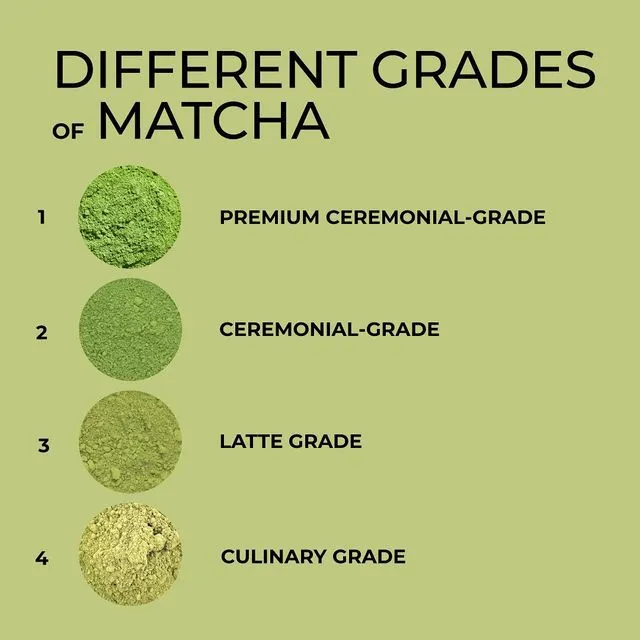
Photo: matcha powder grades comparison ceremonial culinary Japanese tea tins, via i.pinimg.com
Walk into any specialty grocery store or scroll through a matcha retailer's website, and you will encounter a familiar hierarchy: ceremonial grade at the top, culinary grade at the bottom, and a handful of "premium" labels hovering somewhere in between. The price differences can be striking—sometimes the gap between a ceremonial tin and a culinary bag is fifty dollars or more per hundred grams. For the growing number of American consumers building a daily matcha practice, one question naturally follows: is that premium price tag genuinely earned, or is it largely a marketing construct?
The honest answer is both. Understanding which parts are real—and which parts are performance—requires a brief journey into how matcha is actually grown, processed, and evaluated in Japan.
How Matcha Is Graded: The Fundamentals
Unlike wine or olive oil, matcha has no universally standardized grading authority. The terms "ceremonial" and "culinary" are not regulated by any Japanese governmental body or international certification standard. Individual producers and importers assign these labels according to their own criteria, which is precisely where consumer confusion begins.
That said, the underlying quality factors that drive grade designations are real and measurable. They include:
- Harvest timing: The first harvest of the season, called ichibancha, yields leaves with the highest concentration of amino acids—most importantly, L-theanine—and the lowest bitterness. Later harvests produce leaves with more catechins, more astringency, and a less vibrant color.
- Shading duration: High-quality matcha comes from tea plants shaded for three to four weeks before harvest. This process, called kabuse or tana shading, forces the plant to produce more chlorophyll and L-theanine while reducing harsh tannins. Shorter shading periods or no shading at all result in a more bitter, less nuanced powder.
- Leaf selection: Only the youngest, most tender leaves—typically the top two to three leaves of each shoot—are hand-picked or carefully machine-harvested for top-grade matcha. Older leaves, stems, and veins are removed during processing to produce tencha, the precursor to matcha powder. Lower grades often incorporate more of the leaf, including fibrous material.
- Stone-grinding: Authentic matcha is ground using traditional granite stone mills, a slow process that generates minimal heat and preserves delicate flavor compounds. The finest ceremonial grades are ground to an exceptionally fine particle size, contributing to the silky texture and smooth mouthfeel that distinguishes them.
- Color and aroma: Premium matcha displays a vivid, almost electric green—a direct result of high chlorophyll content. The aroma should be fresh, grassy, and subtly sweet, reminiscent of a spring garden rather than dried hay.
What Ceremonial Grade Actually Means
In the context of a traditional Japanese tea ceremony (chado), matcha is whisked with hot water alone—no milk, no sweetener, no additional flavors. The powder carries the entire sensory experience. This is the use case that ceremonial-grade matcha is genuinely optimized for.
A high-quality ceremonial matcha will have a natural sweetness, a creamy umami depth, and an absence of the sharp bitterness that makes lower-grade powders difficult to drink straight. When you pay a premium for ceremonial grade, you are paying for first-harvest leaves, extended shading, meticulous leaf selection, and slow stone-grinding—all of which contribute to a bowl that is genuinely pleasurable without any embellishment.
If your daily practice centers on whisked matcha served in a bowl, consumed mindfully and without additions, ceremonial grade is the appropriate choice. The quality differential is real and perceptible.
However, it is worth noting that even within the ceremonial category, significant variation exists. Some products marketed as ceremonial grade in the US market are first-harvest teas from reputable Japanese regions such as Uji, Nishio, or Yame—others are blended or sourced from regions with less rigorous production standards. Price alone is not a guarantee of quality; sourcing transparency matters considerably.
The Case for Premium Grade
The middle tier—often labeled "premium" or "everyday ceremonial"—occupies genuinely useful territory. These teas are typically made from first or early second harvest leaves, with solid shading practices and careful processing. They may not achieve the transcendent complexity of the finest ceremonial grades, but they offer a clean, pleasant flavor profile that works beautifully in a morning bowl.
For most American consumers who drink matcha daily, premium grade represents an excellent value proposition. You receive a powder that is enjoyable straight, performs well in lattes with a small amount of oat or whole milk, and does not require the kind of ceremonial intentionality—the perfectly heated water, the precise whisking technique—that coaxes the best from a top-tier ceremonial grade.
When Culinary Grade Is the Right Choice
Culinary-grade matcha is produced from later harvests, often with less rigorous leaf selection. The color trends toward a more muted, yellow-green; the flavor is earthier and more bitter. Consumed straight, culinary grade is noticeably less refined.
But in applications where matcha is one ingredient among many—baked into cookies, blended into a smoothie, stirred into a glaze, or incorporated into a matcha latte loaded with sweetener and steamed milk—the nuances of a ceremonial grade are largely lost. Using a forty-dollar ceremonial powder in a matcha banana bread is, from a practical standpoint, unnecessary. Culinary grade delivers the matcha character, color, and antioxidant content that those recipes call for at a fraction of the cost.
The straightforward guidance: use culinary grade for cooking and baking, premium grade for daily drinking, and ceremonial grade when the bowl itself is the ritual.
Cutting Through the Marketing
A few red flags worth knowing. Be cautious of any product that uses "ceremonial grade" as its primary selling point without disclosing the harvest number, the growing region, or the producer. Legitimate premium matcha suppliers are proud of their sourcing and provide this information readily.
Be equally skeptical of dramatic health claims attached to specific grades. While the antioxidant and amino acid content does vary between grades, the differences are less extreme than some marketing implies. A well-sourced culinary grade still delivers meaningful nutritional value. The primary reason to invest in ceremonial grade is sensory quality, not medicinal potency.
Finally, consider freshness. Even the finest ceremonial matcha loses its vibrancy quickly once opened. Store your powder in an airtight container away from light and heat, and aim to use it within four to six weeks of opening.
A Practical Framework for Your Practice
Building a thoughtful matcha practice does not require committing exclusively to the most expensive tier on the shelf. A sensible approach might look like this: keep a tin of premium-grade matcha for your daily morning bowl, a small quantity of ceremonial grade for moments of genuine ritual—a quiet Sunday morning, a guest you wish to honor—and a bag of culinary grade for any recipe that calls for matcha as an ingredient.
This layered approach respects both your budget and the genuine quality differences that exist within the matcha spectrum. It also reflects the spirit of ichi-go ichi-e—treating each encounter with matcha as its own distinct moment, worthy of the appropriate attention and the appropriate tool.
At Kagura Matcha, we believe that understanding what you are buying is the foundation of a practice that is both meaningful and sustainable. Spend wisely, source carefully, and let the quality of your attention matter as much as the grade in your tin.