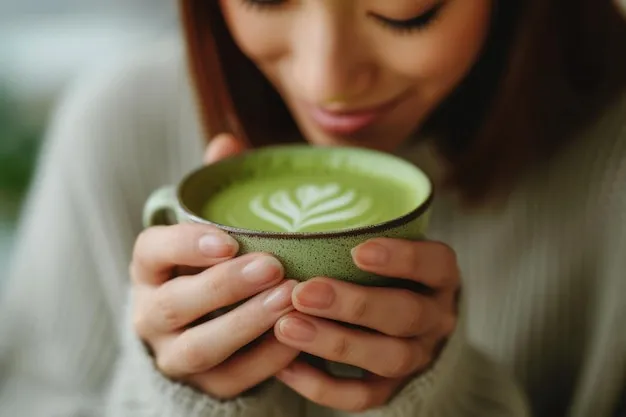
Ancient Technique, Modern Proof: The Chemistry Behind Why Hand-Whisked Matcha Outperforms Every Shortcut

Photo by Photo by Ripley Elisabeth Brown on Unsplash on Unsplash
There is a particular kind of impatience that defines modern wellness culture. We want the benefits of ancient practices compressed into the fewest possible steps, delivered with the least possible friction. Matcha has not escaped this tendency. Electric frothers, cold-brew concentrate pouches, and capsule-based matcha systems have proliferated across the American market, each promising the essence of the Japanese tea experience without the learning curve.
The promise is appealing. The chemistry, however, tells a more complicated story.
When Japanese tea masters insist on the bamboo chasen, water held precisely between 160°F and 175°F, and a specific wrist motion sustained for sixty to ninety seconds, they are not performing nostalgia. They are — whether they would frame it this way or not — executing a preparation protocol that Western food science is only beginning to fully explain.
What Matcha Actually Is, Chemically Speaking
To understand why preparation method matters, it helps to understand what matcha powder contains at a molecular level. Ground from shade-grown tencha leaves, matcha is a dense matrix of catechins (most notably epigallocatechin gallate, or EGCG), L-theanine, chlorophyll, caffeine, and a range of volatile aromatic compounds. These constituents do not exist in isolation — they interact with one another and with their environment in ways that are highly sensitive to temperature, mechanical agitation, and time.
The critical insight is this: matcha is not a soluble powder in the conventional sense. Unlike instant coffee or protein powder, matcha particles do not dissolve in water. They form a colloidal suspension — a temporary dispersion of fine particles throughout the liquid. The quality of that suspension determines how evenly the bioactive compounds are distributed, how they interact with saliva and digestive enzymes, and ultimately how much of their benefit reaches your bloodstream.
The Chasen's Hidden Engineering
A traditional bamboo whisk, or chasen, is not a simple tool. Crafted from a single piece of bamboo split into anywhere from 80 to 120 fine tines, it creates a specific pattern of turbulence when moved in the characteristic W or M motion that tea masters teach. That turbulence does something an electric frother cannot replicate with any consistency: it introduces air in a controlled, layered fashion while simultaneously breaking apart matcha particle clusters without generating excessive heat.
Electric frothers, by contrast, operate at fixed rotational speeds that generate localized friction heat and a different kind of turbulence — one that tends to produce larger, less stable bubbles and, more importantly, can raise the temperature of the liquid at the point of contact. Even a modest increase of 10°F to 15°F at the whisk head is sufficient to begin degrading thermally sensitive catechins, particularly EGCG, which research published in food chemistry journals has shown degrades measurably above 185°F.
Hand-whisking, performed correctly, keeps the liquid in motion without concentrating heat. The result is a finer, more stable foam — what the Japanese call kanten — and a suspension in which matcha particles remain more uniformly distributed throughout the bowl rather than settling toward the bottom or clustering at the surface.
Water Temperature Is Not Aesthetic Preference
Among the variables that American matcha drinkers most frequently dismiss as optional, water temperature may be the most consequential. Boiling water — 212°F — is common in American tea preparation, borrowed from black tea tradition. For matcha, it is damaging in ways that are directly measurable.
At temperatures above 180°F, two things happen simultaneously. First, L-theanine, the amino acid responsible for matcha's characteristic calm-focus effect and much of its umami flavor, begins to degrade. Second, tannins — naturally occurring astringent compounds present in all green tea — become significantly more soluble, releasing into the liquid at concentrations that produce the harsh, bitter flavor many Americans associate with matcha they did not enjoy.
The 160°F to 175°F window recommended by Japanese tea masters is not arbitrary. It represents the temperature range in which EGCG and L-theanine remain structurally stable, tannin extraction stays within palatable bounds, and the powder's aromatic volatile compounds — responsible for the grassy, oceanic, or floral notes depending on the cultivar — are released without being driven off by excessive heat.
Cold-brew matcha, which has gained traction as a summer preparation method, presents a different set of trade-offs. While it virtually eliminates tannin bitterness and preserves heat-sensitive compounds, cold water extracts L-theanine and catechins at significantly reduced efficiency. A 2019 analysis of cold-brew green tea preparations found that cold extraction over twelve hours yielded roughly 30 to 40 percent less EGCG than hot preparation at optimal temperatures. For those seeking the wellness benefits that make matcha worth the investment, that is a meaningful reduction.
The Argument for Adequate Time
Modern matcha preparation often skips a step that traditional practice treats as essential: a brief rest period after the initial incorporation of water, before the vigorous whisking begins. Tea masters typically add a small amount of warm water — roughly one to two tablespoons — to the matcha powder and work it into a smooth paste before adding the full volume of water. This step, called chakin or simply paste formation, is not ceremonial filler.
Matcha particles are hydrophobic on their surface due to the oils and waxes present in the leaf. Introducing them gradually to water, rather than immediately submerging them in a full volume of liquid, allows surface tension to break down incrementally, reducing clumping and producing a more uniform suspension. Rushing this step — or skipping it by adding all the water at once, as most electric frother instructions recommend — produces a less homogenous mixture in which pockets of dry powder can remain unincorporated.
Tradition as Calibrated Science
What emerges from this investigation is not a sentimental argument for doing things the old way because they are old. It is something more interesting: evidence that the Japanese tea ceremony's preparation protocols, refined over centuries of sensory observation and master-to-student transmission, arrived at genuinely optimized parameters before the scientific vocabulary to describe them existed.
The chasen's turbulence profile, the water temperature range, the paste-formation step, the duration of whisking — each element corresponds to a specific chemical or physical outcome that modern food science can now measure and explain. The masters who developed these practices were, in effect, running empirical experiments across generations, selecting for the preparation variables that produced the best results in the bowl.
For American consumers who have embraced matcha as a wellness practice, this has a practical implication. The shortcuts are not neutral. They are trade-offs, and understanding what is being traded — specific compounds, suspension quality, flavor complexity — allows for genuinely informed choices rather than the assumption that convenience is cost-free.
The Case for Slowing Down
There is, of course, something else that traditional preparation offers that no electric frother can replicate: the act of attention itself. The sixty to ninety seconds of hand-whisking, the deliberate measurement of water temperature, the quiet focus required to form the paste without rushing — these are not inefficiencies to be engineered away. They are the practice.
At Kagura Matcha, we have always believed that the ritual and the science are not separate. The mindfulness that the preparation process cultivates is part of why matcha works as a wellness practice, not merely a pleasant side effect. The chemistry we have explored here reinforces that belief in concrete terms: when you slow down enough to do this correctly, you are not just honoring tradition. You are getting more of what you came for.
The matcha paradox, it turns out, is not much of a paradox at all. The traditional methods work better because they were always, beneath the ceremony, a form of precision.